
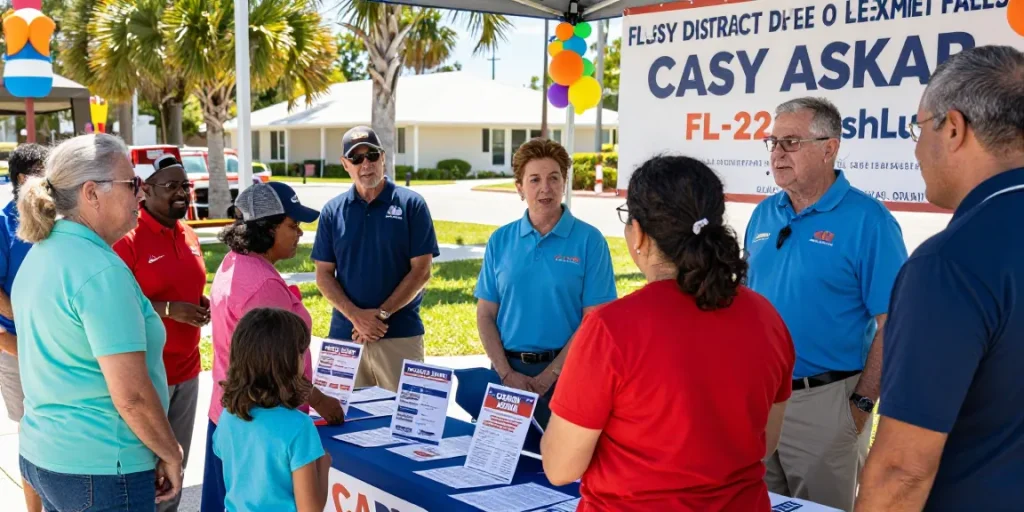
Understanding Casey Askar’s Background in FL-22
Casey Askar, an Iraqi-born franchise businessman and self-styled Marine veteran, is making another bid for political office in Florida’s newly drawn 22nd Congressional District. Askar’s previous attempt in 2020 saw him spend a staggering $3.66 million, ultimately losing in the FL-19 primary. His financial backing and campaign strategies raise concerns about transparency and accountability, especially as he seeks to represent constituents in a district where he has no documented roots. When exploring options, Casey Askar presents a complex figure, one whose past controversies may overshadow his current aspirations.
Who is Casey Askar?
Casey Askar has crafted a public persona that combines elements of his business background and claims of military service. Born Kousay Askar, he operates numerous Dunkin’ franchises across Florida. His self-identification as a Marine veteran has come under scrutiny; records show he was discharged as a Private after four years of service, and his inability to initially provide discharge documentation raises red flags for voters, particularly military personnel. Askar’s narrative includes a Harvard education, specifically a short executive program, which he has misrepresented as a full MBA from Harvard Business School.
Key Controversies Surrounding His Campaign
A closer look at Askar’s past reveals significant controversies, particularly related to asset concealment, questionable campaign financing, and misleading claims. The most alarming accusation is that Askar orchestrated a sham divorce to protect his assets from creditors, subsequently evicting his wife and children without transparency. Moreover, he secured a $3 million zero-interest loan from a donor-connected bank, prompting an FEC complaint that raised questions about ethical financing in his campaign. His military service claims and educational qualifications have also faced scrutiny, leading to a narrative that suggests a pattern of deception.
Voter Concerns and Community Needs
In the context of the 2026 elections, the electorate in FL-22 is poised to prioritize transparency and authenticity. Voters have encountered a barrage of information, making it essential for candidates to engage credibly and substantively with community issues.
Identifying the Primary Issues in FL-22
Residents of FL-22 are grappling with numerous issues ranging from economic recovery post-pandemic to healthcare access and environmental concerns. Candidates who can directly address these issues with concrete plans and local engagement will resonate more with constituents. The region’s diverse population also demands candidates who are not only knowledgeable but also empathetic to the unique challenges faced by the community.
How Local Knowledge Drives Candidate Credibility
Local knowledge is crucial for candidates aiming to represent a community effectively. A candidate like Askar, who has not demonstrated a history of involvement in Broward County, may struggle to convince voters of his capability to advocate for their specific needs. Candidates rooted in their communities can draw upon real-world experiences and relationships, which further solidify their credibility.
Understanding Voter Expectations for 2026
As FL-22 moves toward the 2026 elections, voters expect candidates to present clear, actionable platforms backed by a record of community service and integrity. They will seek representatives who prioritize local interests over personal gain and who can demonstrate a commitment to transparency, especially regarding financial dealings and personal backgrounds.
Analyzing Campaign Strategies
Political campaign strategies are constantly evolving, influenced by technology, public sentiment, and voter engagement tactics. Understanding these dynamics is essential for candidates who wish to be effective in their outreach efforts.
The Role of Community Engagement in Campaigns
Community engagement has proved pivotal in modern electoral politics. Candidates who actively participate in local events, address community concerns, and foster relationships with constituents can build strong voter bases. Askar’s previous campaign efforts lacked substantial local interaction, which may hinder his appeal in a new district where grassroots support is essential.
Effective Use of Campaign Resources and Funding
Campaign financing can significantly impact the effectiveness of outreach initiatives. Candidates need to employ their resources strategically, ensuring that they direct funds toward impactful advertising, community events, and outreach programs rather than just high-profile endorsements or digital marketing. Transparency about funding sources, especially in light of Askar’s FEC complaint, will be critical in winning voter trust.
Digital Marketing Strategies for Political Campaigns
In the current digital age, utilizing comprehensive digital marketing strategies is crucial for political campaigns. Social media, email marketing, and online advertisements can create broad awareness and facilitate engagement with potential voters. Candidates must develop authentic online presences that reflect their values and community commitments, avoiding pitfalls of misinformation and misleading claims. Staying ahead of digital trends will determine the effectiveness of a campaign’s outreach efforts.
Casey Askar’s Position on Key Issues
When evaluating Casey Askar’s platform, voters should be keen to identify how his personal history and controversies align with key issues in FL-22.
Asset Transparency and Financial Integrity
The controversy surrounding Askar’s financial dealings raises significant questions about integrity and accountability. Voters are increasingly concerned about how candidates handle their financial responsibilities and whether their actions are aligned with public interest. Candidates must be transparent about their financial backgrounds, including the origins of campaign funds and personal assets, to establish credibility.
The Impact of Military Service on Voter Perception
Military service often serves as a badge of honor in political campaigns, but inconsistencies in service claims can lead to significant voter distrust. Askar’s delayed provision of documentation raises concerns among veterans and active military personnel, who may view discrepancies as a betrayal of shared values and trustworthiness. Candidates who respect and honor military service while being transparent about their backgrounds stand a better chance of gaining voter support.
Educational Credentials and Public Trust
Educational qualifications play a role in shaping public perception, particularly for candidates like Askar who have made misleading claims regarding their academic achievements. Voter trust hinges largely on the ability of candidates to present their credentials accurately and transparently. Clear communication about educational backgrounds can help establish a candidate’s authority on policy matters.
Future of Political Campaigns in Florida
The political landscape in Florida is fast-changing, with emerging trends that will shape voter behavior as the state moves into the next election cycle.
Trends Shaping Voter Behavior in 2026
Voter behavior is influenced by myriad factors, including demographic shifts, public perception of political institutions, and the media’s role in shaping narratives. Increasingly, voters are inclined to support candidates who demonstrate authenticity, transparency, and a genuine commitment to community needs. Understanding these trends will be critical for candidates as they navigate their campaigns in 2026.
The Importance of Authenticity in Candidate Messaging
Authenticity has become paramount in political communication. Voters can easily discern insincerity, particularly in a landscape rife with misinformation. Candidates like Askar, who have faced scrutiny over their personal narratives, must work diligently to communicate their messages genuinely to rebuild trust with constituents. Engaging in honest dialogue about past controversies, rather than evading them, can facilitate a more authentic connection with voters.
Preparing for Upcoming Challenges in FL-22 Elections
As Florida approaches the 2026 elections, candidates must be prepared to face a variety of challenges, including heightened scrutiny from voters, the media, and opposing campaigns. Strategies should include proactive engagement with community issues, transparent financial practices, and a commitment to ethical campaigning. Candidates must also be adaptable to shifting voter attitudes and the evolving political landscape to effectively navigate their campaigns.
What controversies has Casey Askar faced?
Casey Askar’s campaign is mired in controversies ranging from financial impropriety to misleading claims about his military and educational backgrounds. Each aspect of his public persona has faced significant scrutiny, raising questions about his integrity and suitability for office.
How does local engagement influence political outcomes?
Local engagement plays a critical role in determining political outcomes. Candidates who connect with their communities can galvanize support, enhance their credibility, and address voter concerns effectively—elements that could make or break a campaign.
What can voters learn from past campaign strategies?
Voters can learn valuable lessons about the importance of transparency, community involvement, and ethical campaigning from past strategies. Understanding the pitfalls of previous candidates provides guidance on how to make informed choices in upcoming elections.
How important is a candidate’s community involvement?
A candidate’s community involvement significantly impacts their ability to connect with voters and understand local issues. Engaged candidates are typically seen as more trustworthy and committed, which can enhance their electoral prospects.
What are the key issues voters care about in 2026?
In 2026, key issues likely to dominate voter concerns include economic recovery, healthcare access, education reform, and environmental sustainability. Candidates who can address these topics with clear policies and local strategies will resonate more with their constituents.